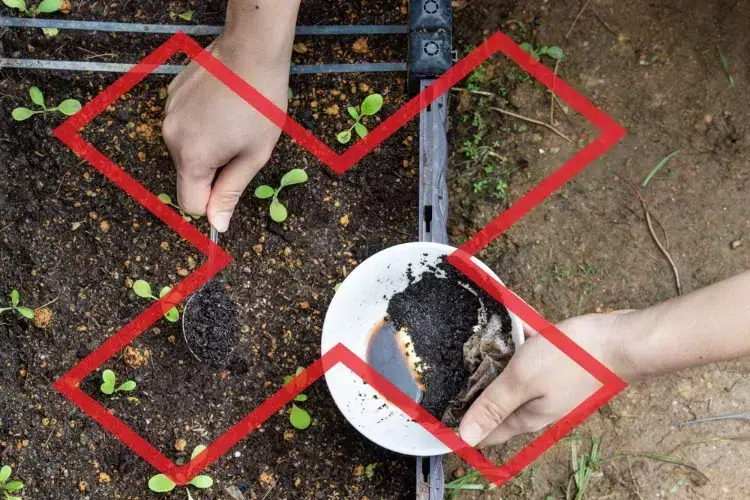
Using coffee grounds in the garden is a popular gardening tip, but is it always a good idea? While coffee grounds are often recommended for fertilizing soil, repelling pests, and improving compost, they can sometimes do more harm than good. Let’s explore when you should NOT use coffee grounds and the potential risks involved.
🚫 When NOT to Use Coffee Grounds in the Garden
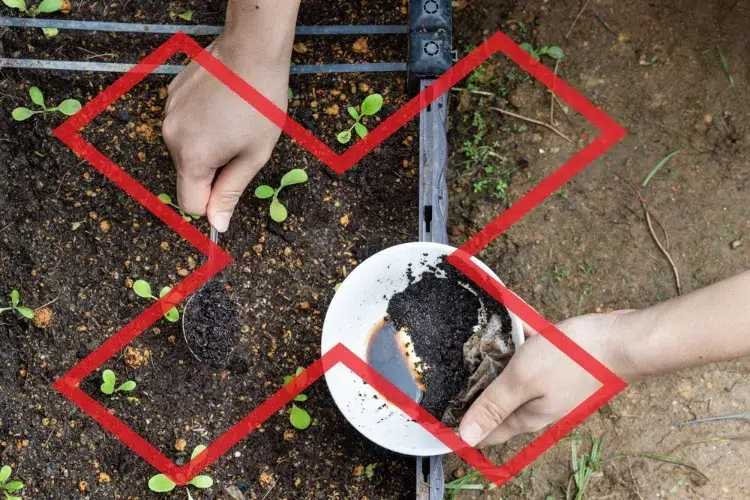
Many articles claim that coffee grounds can do it all—from growing bigger tomatoes to turning hydrangeas blue and acting as free mulch. But is this really true? Before dumping your morning coffee residue into the garden, let’s separate fact from fiction.
🌱 Do Coffee Grounds Acidify Soil?
One of the most common coffee ground myths is that they make soil more acidic. However, the acidity of brewed coffee stays mostly in the liquid, leaving behind grounds with a pH of 6.2–6.8—which is not very acidic at all!
💡 Better alternative? If you want to acidify your soil for blueberries or hydrangeas, use Epsom salt or sulfur instead.
🍂 Is Coffee Ground Mulch a Good Idea?
While coffee grounds seem like a cheap mulch option, they actually pose some serious risks:
⚠️ Compaction – Coffee grounds form a dense layer that blocks water and air from reaching plant roots.
⚠️ Excess moisture – They retain too much water, encouraging fungal diseases and root rot.
💡 Better alternative? Use materials like wood chips, straw, or shredded leaves, which allow proper airflow and drainage.
♻️ Can (and Should!) You Compost Coffee Grounds?
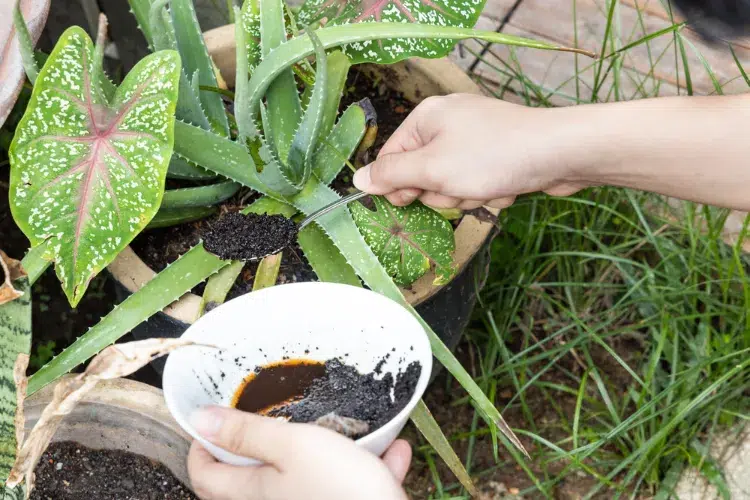
While coffee grounds contain some nitrogen, they aren’t always ideal for composting.
🚨 Potential issues:
❌ Kills worms – In worm composting systems, coffee grounds can wipe out the worm population.
❌ Affects bacteria – Coffee’s antibacterial properties harm both good and bad microbes, disrupting compost balance.
❌ Causes nitrogen loss – In traditional compost bins, too many coffee grounds lead to nutrient depletion.
💡 Better alternative? If you add coffee grounds to compost, do so sparingly and balance them with “brown” materials like leaves or straw.
🐌 Do Coffee Grounds Kill Slugs?
Many gardeners believe that coffee grounds repel slugs, but research suggests otherwise.
❌ Old coffee grounds lose effectiveness, and in some cases, they attract snails rather than repel them!
✔️ However, you can use them as bait to trap slugs in one area.
🚨 The Biggest Issue: Caffeine Can Harm Plants!
The most important reason to avoid using coffee grounds is that caffeine inhibits plant growth. This means that while coffee helps us wake up, it can actually slow down plant development!
💡 Better alternative? If you’re looking for a natural weed killer, coffee grounds can be useful—but keep them away from plants you want to thrive.
☕ Final Verdict: Use Coffee Grounds Wisely!
✅ Use in moderation in compost (with brown materials).
✅ Try as a slug bait rather than a repellent.
✅ Consider for weed control (away from desired plants).
🚫 Avoid using as mulch—it blocks water and air.
🚫 Do NOT use to acidify soil—it’s not acidic enough.
🚫 Limit composting in worm bins—it can kill worms and microbes.
By understanding the risks, you can make better decisions about when coffee grounds help or harm your garden! 🌱🚫