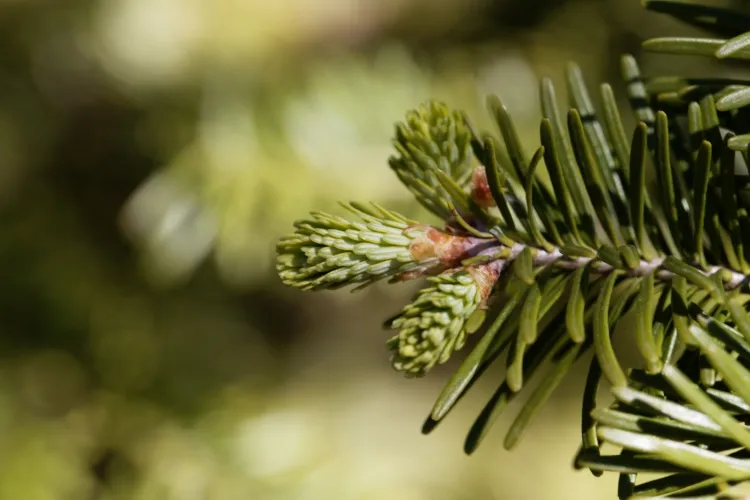
Looking to add an evergreen tree to your garden? The balsam fir (Abies balsamea) is an excellent choice! Known for its fragrant needles, attractive crown shape, and versatility, this tree can serve as a windbreak, a Christmas tree, or an ornamental feature in your landscape. However, before planting, it’s essential to understand the best conditions, timing, and care to ensure healthy growth.
🌲 Why Plant a Balsam Fir?

Native to North America, the balsam fir is a decorative conifer with evergreen needles that release a pleasant balsamic fragrance. This tree is a popular choice for natural hedges and even serves as a living Christmas tree each winter.
🌟 Key Features of the Balsam Fir:

✔️ Fragrant, flat needles with a deep green color
✔️ Small, round, green cones
✔️ Gray to reddish-brown scaly bark
✔️ Shallow root system – helps it withstand wind, snow, and harsh conditions
⚠️ One Drawback: Like many conifers, balsam firs are susceptible to fungal diseases such as polypore and witches’ broom rust. Proper planting and care can help prevent these issues.
🌍 Best Conditions for Growing a Balsam Fir

Balsam firs thrive in cool climates and are well-adapted to regions with moist, slightly acidic soil. Originating from the dense forests of Canada, this tree can tolerate various soil types, but proper site selection is crucial.
✅ Ideal Growing Conditions:
✔️ Cool temperatures
✔️ Moist, well-drained, acidic soil
✔️ Partial shade to full sunlight
🌱 When to Plant a Balsam Fir?

🌸 Spring: The best time to plant a balsam fir is early spring, when soil temperatures are warm enough to promote root development and frost risk is minimal.
🍂 Fall: Fall planting is also possible if done before the first frost.
🔥 Summer & Winter: Avoid planting in summer (too hot and dry) and winter (soil is too cold for root establishment).
🌿 How to Plant a Balsam Fir from Seeds

Growing a balsam fir from seeds requires patience but is a rewarding process.
🌰 Step-by-Step Guide:
1️⃣ Collect Seeds in Fall – Pick seeds from a healthy tree, ensuring they are not affected by diseases.
2️⃣ Prepare the Seeds – Soak them in lukewarm water for 24 hours to stimulate germination.
3️⃣ Plant in Well-Drained Soil – Bury seeds about 6 mm deep in moist soil.
4️⃣ Maintain Moisture – Keep the soil slightly damp but avoid overwatering.
5️⃣ Wait for Germination – Once the seedling reaches 15 cm, transplant it into a container or open ground.
⏳ Growth Time: Balsam firs take 15 to 30 years to reach full maturity.
🌲 Caring for a Balsam Fir

✔️ Watering: Once or twice a week in hot, dry periods
✔️ Sunlight: Prefers full light in early growth but can tolerate partial shade
✔️ Fertilization: Young plants benefit from spring fertilization using a conifer-specific fertilizer rich in nitrogen, phosphorus, and potassium
By planting a balsam fir, you are creating a green oasis that enhances biodiversity while adding beauty and freshness to your garden. 🌿✨ Would you try growing one? Let us know!


