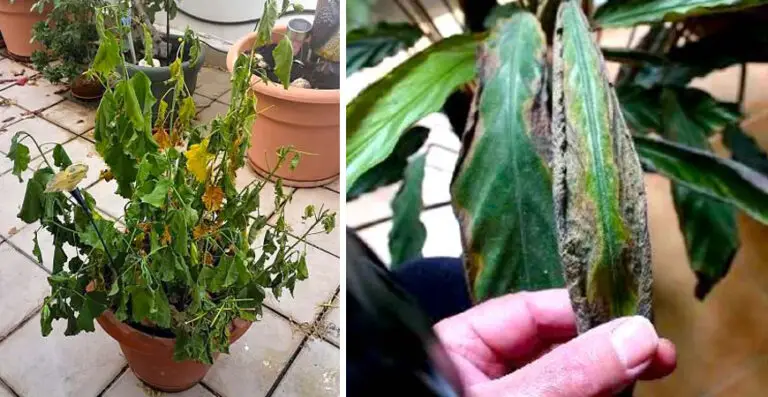
Signs of Overwatering in Plants
While water is essential for plant health, too much of it can be detrimental. Here are five signs that your plant may be receiving too much water:
Brown Leaf Tips: If you notice the tips of your plant’s leaves turning brown, it could indicate overwatering. Initially, this may seem like a sign of dehydration, but over time, the leaves may become soft and mushy, indicating root rot.

Leaf Fall: While some leaf loss is natural, excessive leaf drop, especially of young leaves, can be a sign of overwatering. If new shoots are opening but leaves are still falling, it’s likely due to excess moisture in the soil.

Iron Chlorosis: Yellowing leaves, often mistaken for a lack of iron, can actually be a result of overwatering, especially in clay soils. This discoloration occurs due to poor root health caused by waterlogged soil.

Withering: Overwatered plants may appear droopy and weak, despite having wet soil. This is because waterlogged roots prevent proper oxygen uptake, leading to wilting and lack of vitality in the plant.

Fungi in the Substrate: Greenish-white film or fungal growth on the soil surface indicates excess moisture, which creates a favorable environment for fungal proliferation. This can further damage the plant’s roots and overall health.

Curing Overwatering:
- Stop Watering: Immediately cease watering the plant and remove any excess water from the saucer or drainage tray beneath the pot.
- Allow Drying: Let the plant sit in a well-ventilated area for approximately 12 hours to allow the roots to dry out. Prune any blackened roots to promote healthy regrowth.
- Disinfect Pot: Clean and disinfect the pot with alcohol or bleach to prevent fungal spores from spreading.
- Change Substrate: Repot the plant in fresh, well-draining soil to prevent future waterlogging and root rot. Ensure the new substrate allows for proper drainage.
By recognizing these signs and taking appropriate action, you can help your plants thrive by maintaining optimal soil moisture levels.


