
Why should you consider constructing an owl nest box for your garden? How can you build one, and where should you install it for optimal results?
Let’s explore the reasons and methods behind this endeavor.
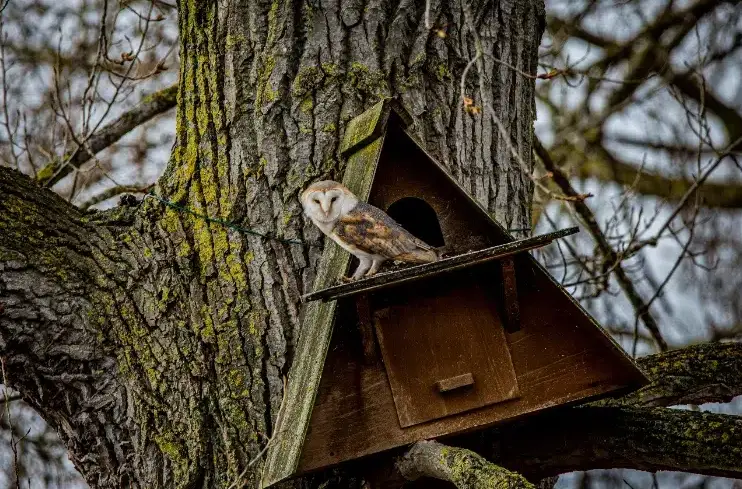
1. Why Choose an Owl Nest Box?
The owl’s natural habitat is diminishing due to various factors such as deforestation and intensive agriculture. By providing a nest box, you’re offering a sanctuary for these nocturnal hunters. Owls play a crucial role in controlling rodent populations, contributing to ecosystem balance by preying on rodents like voles, along with other small creatures such as reptiles, amphibians, insects, spiders, and earthworms.
2. How to Build It?
Constructing an owl nest box requires durable and moisture-resistant wood, like softwoods, for longevity and ease of maintenance. Avoid materials like plywood and chipboard that deteriorate quickly when exposed to moisture.
Here’s a basic guide:
- Cut six boards: four for the faces (50 cm high by 25 cm wide) and two for the roof and floor (40 cm wide).
- Drill a 10 cm diameter entrance hole.
- Create ventilation holes at the bottom.
- Sand the boards for a smooth finish.
- Pre-drill holes to prevent splintering.
- Assemble the pieces securely.
- To protect young owls, integrate a PVC sleeve around the entrance hole to prevent entry by predators.
3. Where to Install Your Owl Nest Box?
For safety and accessibility:
- Mount the nest box against the trunk of a deciduous tree, at least 5 meters above the ground.
- Avoid placing it on branches.
- Choose a southeast orientation to shield it from rain and wind.
- Ensure it’s not easily accessible to pests.
- Secure it using wire and cables encircling the trunk.
- Optimal timing for installation is early autumn, providing shelter through the cold months until spring.
- During the breeding season, refrain from disturbing the nest box to avoid agitating adult owls.
By following these guidelines, you can create a safe haven for owls in your garden, contributing to biodiversity and pest control while fostering a deeper connection with nature.


