
The orchid, known for its elegance and exotic beauty, sometimes encounters issues like a dry or brown stem. Before giving up on your orchid, it’s crucial to understand the causes and take necessary actions to revive the plant. In this guide, we explore the reasons behind orchid stem issues and provide steps on how to save and revive an orchid.
Why Are My Orchid Stems Drying Out?
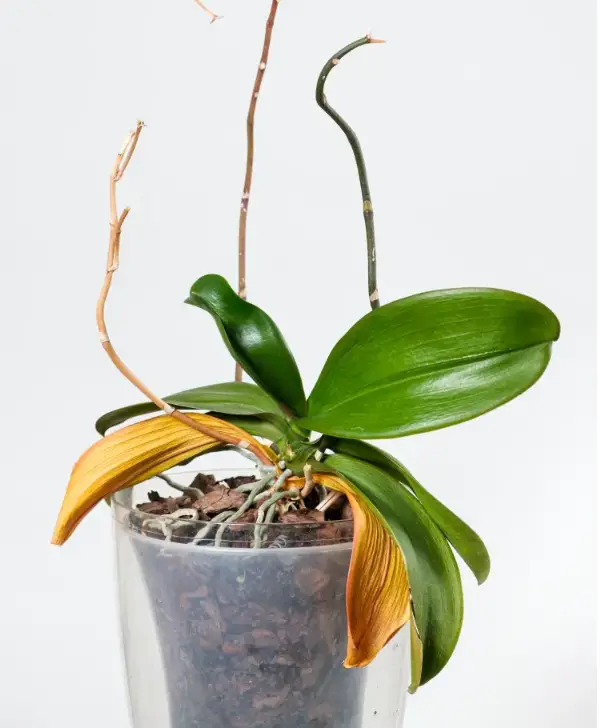
- Improper Watering Can Cause the Orchid Stem to Dry Out
- Orchids require consistent but not excessive watering. Insufficient watering can lead to a dry and withered stem, while too much moisture may cause rot.
- Too Much Light Can Cause Drying
- Orchids prefer filtered light, and excessive direct sunlight can burn the stem and leaves, turning them brown. Changing the plant’s location to avoid direct sunlight is crucial in such cases.
- Exposure to Too Low Temperatures
- Prolonged exposure to low temperatures can hinder the orchid’s ability to absorb nutrients, leading to dry and brown stems.
- Diseases
- Bacterial and fungal diseases, often due to excessive moisture, can damage orchid stems and leaves. Pruning infected parts and repotting may be necessary.
How to Save an Orchid with a Dry Stem?

- Cut off the Damaged Parts
- Using sterilized scissors, cut off any brown and damaged parts of the stem just above a node or joint to stimulate new growth. Ensure the new shoots are healthy.
- Transplant
- Depending on the extent of damage, transplant the orchid to inspect its roots. Clean and prune healthy or slightly damaged roots, then transplant into new potting soil and a suitable pot.
- How to Grow a New Stem?
- For the orchid stem to grow back, maintain a good watering routine, provide humidity between 50-70%, fertilize with an appropriate fertilizer outside dormant periods, offer filtered and indirect light, and maintain a temperature between 25-30 degrees.
By following these steps and providing the necessary care, you can successfully save an orchid with a dry stem and encourage new growth. Understanding the specific needs of orchids is key to their well-being and vibrant blossoming.
Show Comments


