Most eggshells travel straight from the breakfast plate to the trash. That seems harmless, but gardeners often see those brittle shells as a free soil ingredient. The promise is tempting: sprinkle them beneath a cucumber and watch the vine explode with fruit.
The honest result is less instant and more useful. Eggshells can give cucumber soil a slow-release calcium boost when they are cleaned, dried, and ground. They will not replace fertilizer or rescue a thirsty vine in a day. Used as part of good care, however, they can help build the conditions cucumbers need for strong growth and continued fruiting.
What Eggshells Actually Add to Soil
An eggshell is made mainly of calcium carbonate. Plants use calcium to form sturdy tissues and support growing tips. It matters to cucumbers, especially while roots, leaves, flowers, and fruit are developing quickly.
There is one important catch: plant roots cannot take calcium directly from a visible shell fragment. The material must weather and react in the soil. Smaller particles break down faster than halves or jagged pieces, so preparation makes a real difference.
Eggshells contain only small amounts of other nutrients. They are not a full meal for a cucumber plant. A vine still needs nitrogen for leafy growth, phosphorus for roots and flowers, potassium for overall vigor, and several trace nutrients.
Make Eggshell Fertilizer for Cucumbers
Clean the shells
Rinse fresh shells under water to remove the remaining egg white. This reduces odor and discourages pests. Set the shells on a tray until completely dry. If needed, place them in a cooling oven after cooking; there is no need to waste energy heating an oven only for shells.
Create a fine meal
Break the dry shells into small pieces, then grind them to a texture close to coarse flour. A mortar works for a small batch. If you use a grinder, allow the dust to settle before opening it. Avoid inhaling the powder and wash the equipment afterward.
Apply a light layer
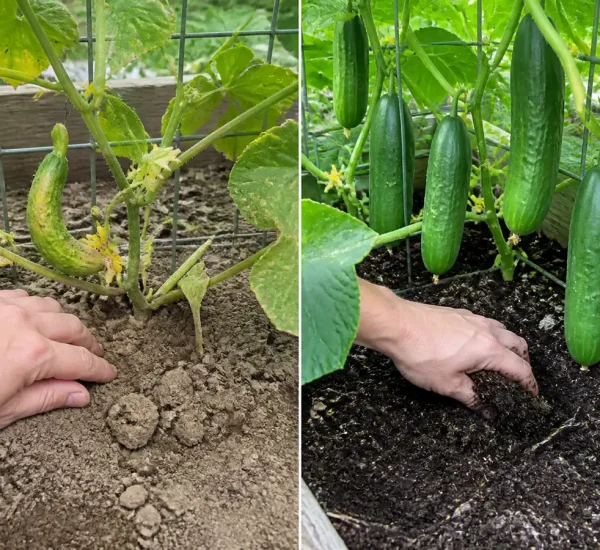
Sprinkle about one tablespoon around a young plant or up to two tablespoons around a large vine. Spread it across the root zone instead of piling it against the stem. Gently work it into the soil surface and water.
You can also add crushed shells to a working compost pile. Composting places them among moist, active material and makes the finished amendment easier to distribute through the garden.
For next season, prepare the bed in autumn or early spring. Mixing the powder through several inches of soil gives weather and soil life more time to work on it. This patient approach is more useful than dropping large shell pieces into a planting hole on transplanting day.
Four Steps That Matter More Than the Shells
Keep moisture even
A cucumber fruit holds a lot of water, and its shallow roots dislike sudden changes. Give the bed a deep drink, then wait until the soil surface starts to dry before watering again. In hot weather, check containers and raised beds daily. Mulch helps prevent rapid drying.
Use a complete plant food
Work mature compost into the bed before planting. During the growing season, use a vegetable fertilizer only as its directions recommend. Once the vine is flowering, choose a balanced or fruiting formula rather than repeatedly applying a high-nitrogen lawn product.
Give vines room and light
Cucumbers perform best with plenty of sun and moving air. A trellis lifts foliage from wet soil, makes pests easier to spot, and helps you find fruit before it becomes oversized. Do not crowd several plants into a tiny pot.
Harvest while fruit is tender
Check beneath the leaves every day or two. Picking cucumbers at the right size keeps the fruit crisp and directs the vine toward new flowers. If one becomes yellow and seedy, remove it rather than leaving it on the plant.
Mistakes That Cancel the Benefit
The biggest mistake is expecting an overnight transformation. Eggshell calcium works slowly. If leaves are yellow today, first check watering, drainage, insects, and the plant’s feeding history.
Another mistake is using handful after handful without knowing the soil. Eggshells can affect pH over time, which may be unwanted in alkaline ground. A basic soil test gives better guidance than guessing.
Do not use shells as a sharp barrier for slugs and assume the plants are protected. Damp shell pieces do not provide dependable control. Use proven garden sanitation, hand-picking, traps, or locally approved products when pests are causing damage.
The Result Worth Expecting
Eggshell fertilizer for cucumbers is best viewed as patient recycling. It turns a kitchen leftover into a modest source of calcium and keeps useful material out of the bin.
The dramatic-looking difference comes when that small amendment joins reliable care: rich soil, steady moisture, correct feeding, full sun, airflow, and regular harvests. Follow that plan and your cucumber vines can stay greener, handle fruiting more comfortably, and keep producing far longer than neglected plants beside them.