
The bond of love has many advantages. It is easy to grow and is a resistant plant, which if you know how to take care of it can last for many years. But the biggest advantage is that it is a natural air purifier. In the room where you place it, you will have pure air.
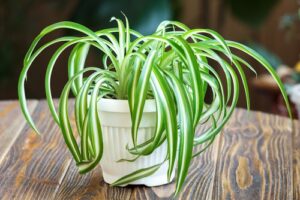
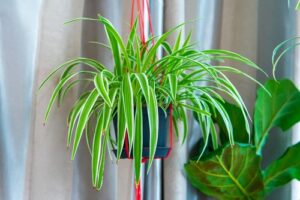
In addition, it is very attractive . It has long, stylized, ribbon-like leaves, light green in color, and a white stripe in the center. The leaves grow from a center towards the outline, which gives it a bushy appearance.
Below I will share some tips and tricks so that the bond of love lasts a long time and is in good condition .
1. The ground
The soil needs to have good drainage so that moisture does not rot the roots. It is best to create a mixture that contains sand, coconut fiber and perlite. The latter favors the aeration of the soil and the oxygenation of the roots.
2. Lighting
It needs sunlight, but it does not shine directly on it, much less at high temperatures. If you notice that the leaves become brittle or fragile, it is because they are receiving too much light. It is best to move it to another place in the house.
It can live in a dark place, but the lack of light will cause it to lose the white line on the leaves.
3. Irrigation
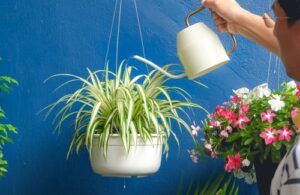
Irrigation is not the same in summer as in winter. With high temperatures, we have to water the love bow every two days and spray its leaves so that they have moisture. With low temperatures, it is enough to do it every ten days.
We do not have to exceed the amount of water. The formation of puddles damages the roots, does not allow the plant to grow and could bring bacteria from the humidity. If this happens, you must prevent it from coming into contact with other plants and discard the bond of love.
It is best to identify whether the soil is wet or dry . You can insert your finger into the soil about two centimeters. If it is dry, then you should proceed to water.
4. Fertilizer
In general, lovebird does not need fertilizer, but if you find that a little extra help is needed, I suggest using one that is rich in nitrogen , as this encourages the development of green leaves.
You can also add worm castings every two weeks in the hot months. This will enrich the soil with phosphorus, potassium and magnesium, which contributes to the regulation of soil Ph. But we should not exaggerate with the fertilizer . We could saturate the roots and affect the foliage.
5. Pruning
It is advisable to remove the withered leaves so that the plant can use its energy on the healthy leaves. I suggest not using pruning shears , since the leaves are delicate and can be damaged by cutting. It is best to tear them off with your hands, just below the yellow or brown part of the leaf. It is not necessary to remove the entire leaf.
6. Transplant
The bow of love can be planted at any time of the year, although it is recommended to do so in early spring , before it begins to put out its runners for reproduction.
The plant grows very quickly. If it is in a pot, it must be done before the roots grow beyond the capacity of the container or they could break it. You can place it in a larger pot or divide the plant in two. A little peat in the new container is enough for the transplant.


