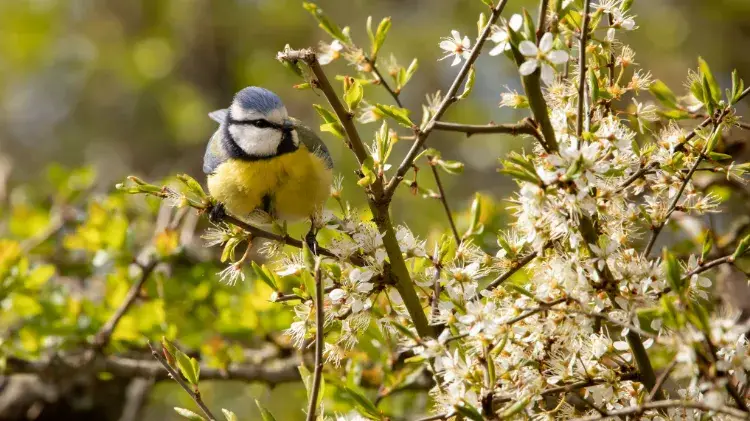

Exciting news—warmer weather is on its way! As you start tidying up your garden, it’s also a good time to think about how to assist our feathered friends. How can we support birds in the spring? Should we keep feeding them and providing water? What about creating mixed hedges? We’ve got answers to these questions in this article!
How to Help Birds in Spring: Our Guide!

Feeding Birds in Spring
When the days grow longer and the sun shines more brightly, new plant growth, fruits, and seeds begin to appear in your garden. But what about the birds? With natural food sources becoming more available, is there still a need to feed them? Studies suggest that continuing to feed birds in spring and summer can negatively impact their reproduction and the nutrition of their chicks, who may struggle with certain foods. Thus, it’s generally best to stop supplemental feeding in spring.

You can keep feeders up through March to account for any late frosts or sudden temperature drops, but by April, it’s wise to clean and prepare them for the winter season. Disassemble the feeders, thoroughly brush and dry the parts before reassembling.
Additionally, consider replanting certain species like hawthorn, which blooms profusely in spring and provides berries for the birds while attracting insects. Leaving trees and dead wood in your garden post-pruning will also provide essential insects and conserve moisture, benefiting bird life.
Providing Water for Birds

Water is as crucial for birds as it is for humans. While finding water is usually easy in spring, March and even April can still bring freezing temperatures in some regions. To prevent your bird bath from freezing, add warm water in the morning. During dry spells, ensure there is always a reliable water source. Clean the water container weekly to prevent bacteria growth as temperatures rise.
Creating Mixed Hedges for Birds

Mixed hedges are fantastic for bird nesting. To encourage birds to nest in your garden, leave small nooks and crannies in your hedges for them to build their nests. Plant flowering shrubs to attract insects, which provide food for birds. Let a patch of nettles grow; they can offer excellent nesting material for species like the blackcap.
Additionally, keep water available and refreshed. For food, scatter small fruits under a net to prevent them from being devoured too quickly, and consider planting raspberry or redcurrant bushes. Lastly, after brushing your pets, leave their fur on shrubs. Birds will quickly use it to line their nests, enhancing their comfort.
By following these tips, you’ll be supporting birds during the crucial spring period and helping them thrive in your garden.


