
Looking for a unique and functional privacy screen for your garden? Why not go off the beaten track and plant a fruit hedge that not only offers protection from prying eyes but also provides edible fruits throughout the seasons? Here’s how to create your own fruit hedge with the best edible shrubs to enjoy privacy and delicious harvests!

How to Plant a Fruit Hedge?
You may wonder why you should choose a fruit hedge. Well, there are several good reasons:
- Wind protection and shielding from the curious eyes of neighbors.
- The opportunity to enjoy a delicious harvest of fruits.
- Creating a beautiful and decorative effect in your garden.
Intrigued? Before we dive into the best plants for a fruit hedge, here are some essential tips for success:
- Soil Preparation: Start by clearing the ground, removing any weeds, and enriching the soil with some compost. Healthy soil gives your fruit bushes the best start.
- Spacing: Leave enough space for each plant to thrive. Generally, a one-meter distance between each shrub is ideal. Crowding them too close will lead to competition for nutrients and space, which could also attract pests and diseases. Initially, the plants may seem sparse, but they will soon fill in.
- Planting in One Go: It’s best to plant your fruit hedge all at once so that the root systems can establish together, forming a stronger, more cohesive barrier.
- Timing: Most edible hedges should be planted in early spring, after the last frost, to give them ample time to settle in and grow.
Now that you’re prepared, let’s look at the top edible shrubs that will help you create a stunning, functional hedge in your garden!
The 3 Best Edible Shrubs to Protect You from the Wind and Prying Eyes
Here are the best fruit-bearing shrubs to plant for a privacy screen that’s both beautiful and edible!
1. The Blueberry Bush

Blueberries are a fantastic choice for an edible fruit hedge. Not only do these small blue fruits offer a host of health benefits, but they’ll also enhance the aesthetic of your garden. Here’s what you need to know about planting blueberries:
- Planting Time: Best planted between August and November, although spring planting is also possible if you provide plenty of water during the first year.
- Soil Preference: Blueberries are acid-loving plants, thriving in soil with a pH between 4.5 and 5.5. They prefer partial shade but can tolerate some sunlight.
- Planting Tips: Soak the root clumps in water for about 30 minutes before planting them in well-enriched soil. During dry spells, water regularly, and mulch with dead leaves in autumn to keep the soil moist.
2. The Pomegranate Tree

For a Mediterranean touch in your garden, the pomegranate tree is a perfect choice! Its beautiful red fruits and bright flowers make it a striking addition to your hedge. Here are some key points about planting pomegranates:
- Planting Time: If buying bare-root plants, plant them in autumn or winter (frost-free). Container plants can be planted from March to April, ensuring plenty of water during the first year.
- Soil Preference: Pomegranates tolerate all types of soil but thrive best in well-drained soil. In cooler regions, ensure good drainage.
- Planting Tips: Choose a sunny spot, sheltered from northerly winds. When planting, dig a deep hole, add well-rotted compost, and cover the base with a layer of gravel to improve drainage.
3. Black Elderberry
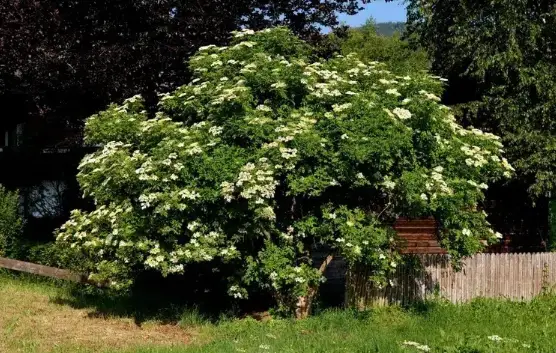
The black elderberry is an excellent choice for a fruit hedge. It’s hardy, disease-resistant, and produces fragrant flowers followed by edible berries loved by both humans and birds. Here’s how to plant it successfully:
- Planting Time: Autumn (November-December) is ideal for planting elderberries, but spring planting is also possible with regular watering to keep the soil cool.
- Soil Preference: Elderberries thrive in rich, moist soil and can tolerate sun or partial shade.
- Planting Tips: Dig a hole slightly larger than the root ball, loosen the soil, and add compost. Soak the root ball in water before planting and place a stake to support it. Pack the soil down around the base and form a watering basin around the plant.
Conclusion: Your Perfect Edible Privacy Hedge
By planting these edible shrubs, you can create a privacy screen that provides both beauty and function. Not only will your fruit hedge keep the wind and prying eyes at bay, but it will also offer a delicious harvest of fruits throughout the seasons.
Blueberries, pomegranate trees, and black elderberries are all excellent choices that bring a unique touch to your garden, while also offering valuable nutrition. With the right soil preparation, proper spacing, and patience, you’ll soon enjoy a thriving, edible privacy hedge! 🌿


