
As summer approaches, gardeners must be vigilant against pests that can damage their plants. One such pest is the box tree moth, a troublesome butterfly that targets hedges, borders, and boxwood topiaries. Present across all regions of France, this pest can cause significant damage if not managed properly. Learn how to identify the box tree moth and discover effective methods for eradication.
How to Recognize the Box Tree Moth
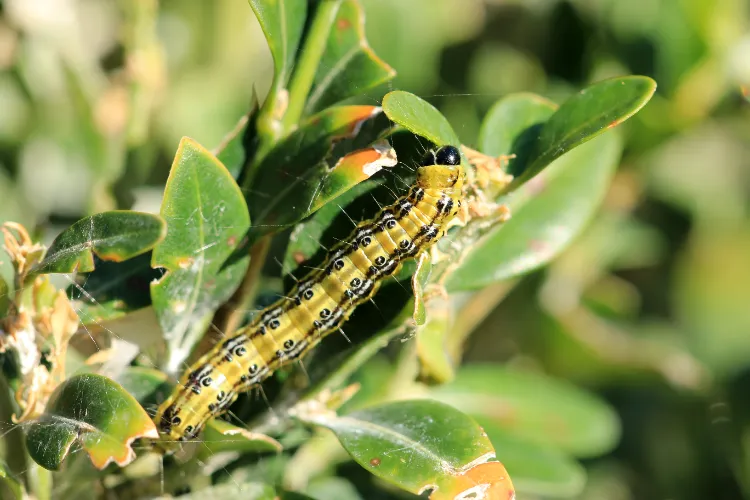
The box tree moth (Cydalima perspectalis) is a nocturnal butterfly known for its distinctive appearance. Here’s how to identify it:
- Appearance: The box tree moth has a wingspan of 36 to 44 mm. Its wings are primarily white and brown, often with golden or iridescent reflections that distinguish it from other moths.
- Eggs and Caterpillars: The female moth lays eggs on the underside of boxwood leaves. The caterpillars are light green with dark green longitudinal stripes and black warts. They have a black, shiny head and can grow to 35-40 mm in length before pupation.
The box tree moth undergoes three stages:
- Adult Moth: The flying stage, active at night.
- Caterpillar: The larvae that feed on boxwood leaves.
- Pupa: The stage before becoming an adult moth.
In Europe, the box tree moth has three reproductive cycles from April to October. This overlapping means you may find both moths and caterpillars at the same time.
How to Overcome the Box Tree Moth
Here’s what you can do to manage and eliminate the box tree moth:
- Identify Symptoms:
- Leaf Damage: Brown leaves and premature leaf drop.
- Webs and Cocoons: Look for webs and cocoons at the base of the boxwood.
- Droppings: Small green droppings on lower branches.
- Caterpillars: Green caterpillars with yellow and black stripes may be visible.
- Regular Monitoring:
- Inspect Weekly: Examine your boxwood leaves at least once a week to catch infestations early.
- Manual Removal: If caterpillars are present in small numbers, manually remove them. They are non-stinging but can cause damage if left unchecked.
- Effective Treatments:
- Pheromone Traps: Use pheromone-based traps to attract and capture male box tree moths. Set these traps in early April to monitor and control the population. These traps help limit reproduction by trapping the adult moths.
- Organic Insecticides: Apply an organic insecticide containing Bacillus thuringiensis, a naturally occurring bacterium. This treatment is effective against caterpillars and should be used during dry periods for best results.
- Natural Methods: For a more natural approach, use a pressurized water jet to clean your box trees. This method removes eggs, nymphs, and caterpillars without chemicals.

Conclusion
Managing the box tree moth requires vigilance and timely action. By recognizing the signs of infestation early and employing both preventative and treatment measures, you can protect your boxwood plants from these damaging pests. Regular inspections and appropriate treatments will help keep your garden healthy and thriving.


