
Have you become a composting expert and find yourself wondering how to handle the abundance of mature compost? Look no further! In this article, we address key questions on storing mature compost, covering topics such as storage methods, duration, and how to enhance it. Join us on this journey of sustainable compost management!
1. How to store your ready compost?
1.1 Ground storage
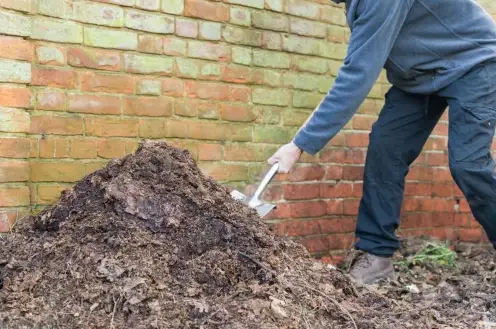
The simplest method involves storing compost on the ground in a sunny garden corner. Cover it with a plastic tarp to protect it from rain, ensuring control over humidity and heat. Regularly check the pile’s condition, maintaining the right moisture level. Aeration is crucial, so use a rake for periodic turning. Additional compost can be added at any time to enrich it further.
1.2 Storage in a bin

Another effective method is to reuse the bin in which you initially made the compost. This space-efficient approach ensures quality material. To optimize this technique, create holes at the container’s bottom for aeration and microbial balance. Regularly water the stored compost to maintain its qualities.
1.3 Storage in a bag

For those facing space constraints, special compost bags with holes are a clever solution. Available in gardening stores, these bags allow proper watering and aeration. Fill and stack them in your garden shed, remembering to turn them occasionally for optimal storage.
1.4 Storage in a pit

Arguably the most effective method involves burying compost in a pit. This technique maintains the compost’s quality through the soil’s microbial activity and the contributions of beneficial worms. Their activity amends the compost, enhancing nutrient content and humidity. To access it, simply dig it up, avoiding unsightly piles in your garden.
2. How long can compost be kept?
While some believe compost can be stored indefinitely, nutrients gradually diminish over time. The optimal period for storing compost is 3 to 4 months, retaining its properties for 15-16 weeks. Beyond this timeframe, nutrient levels decrease. Compost can still be safely used on plants after one or two years of storage.
3. How to optimize it in case of bad odors?
To ensure your compost is well-prepared, check for a homogeneous, lumpy, dark brown structure with a pleasant forest-like smell. If not, follow these tips:
- Reduce watering.
- Add dry materials (cardboard, newspaper, dead leaves, straw, etc.).
- Stir the material regularly.
To test the compost’s balance, place some in a saucer, sow watercress or lamb’s lettuce seeds, and if they grow, your compost is in good condition.
By implementing these storage methods and tips, you can manage your mature compost efficiently, ensuring its longevity and enhancing its quality for sustainable gardening.


