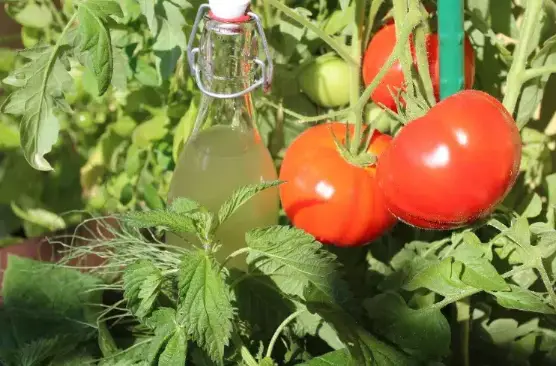
In today’s article, we will explore the benefits of the magic plant nettle and why it is so useful for growing tomatoes! How to put nettle at the foot of tomatoes? The Deavita editorial team provides the answers to this and many other important questions for your garden.

What is the Use of Nettle Manure?
Nettles are rich in nitrogen and iron, which makes them incredibly beneficial for your garden. Many gardeners use nettle manure when planting tomatoes, vegetables, flowers, and shrubs. The mixture promotes rooting and restores the bacterial life in the soil. Nettle manure is a source of beneficial bacteria and microorganisms, helping to improve the soil’s health and promoting better decomposition of organic matter. This creates a living soil, allowing for better exchange of nutrients between the plants and the soil, ensuring that your tomatoes receive the nutrients they need more efficiently.
- Nitrogen encourages leaf and stem development.
- Potassium aids in photosynthesis, sugar production, transport, and storage.
- Phosphorus is vital for root formation, plant growth, and drought resistance.
- Calcium strengthens cell walls, promotes photosynthesis, and supports chlorophyll function to capture light for energy transformation.
How to Put Nettle at the Foot of Tomatoes?

Due to its high nitrogen content, nettle purine is particularly effective in early plant growth, especially for leaf formation. However, it is recommended to use fermented nettle extract in small quantities if your soil has already been enriched with manure or compost. Too much nitrogen can inhibit tomato growth and reduce their flavor. It can also shorten their shelf life.
Prepare the Necessary Tools
To prepare your nettle treatment, you will need a few simple tools:
- Gloves
- Pruning shears
- A funnel
- Non-metallic containers or one-liter cans
It is best to use rainwater for your mixture, as hard water can make it harder for plants to absorb the nutrients. If you use tap water, add a bit of vinegar and let the water sit for 24 hours to evaporate the chlorine. The water should be at room temperature (around 16°C).
Speed Up the Fermentation Process
To accelerate fermentation, crush the nettle into small pieces. You can also add some root pieces for added effectiveness. Pour about 10 liters of rainwater onto the nettles, stir well, and cover with a cloth. Store your mixture in a shade and dry area, far from your home to avoid the strong smell. Stir your mixture daily, and expect results in about a month.
Note: The speed of fermentation depends on the temperature—the warmer it is, the faster the process. When you stop seeing bubbles, the fermentation process is complete, and you can begin filtering.
Various Methods of Applying Nettle
You can use the nettle mixture in different ways:
- Watering with the mixture stimulates the roots.
- Foliar sprays stimulate the leaves.
It is useful to alternate between these methods during the first few weeks after planting your tomatoes. After preparing the nettle solution, store it in a tightly closed container to limit air exposure. Store the mixture in a shaded area and keep it protected from frost. You can keep it for up to a year.
In conclusion, nettle is an incredibly beneficial plant for your garden, especially for tomatoes. By following these simple steps, you can effectively use nettle manure to promote healthy growth, boost soil quality, and protect your plants from pests.


