
To properly water an indoor potted bonsai, follow these steps and guidelines:

Check soil moisture: Before watering, always check the moisture level of the soil. Avoid watering if the soil is still wet, and water if it feels slightly dry to the touch. Overwatering can be harmful to bonsai, so it’s crucial to water only when necessary.
Use the right soil mixture: The soil mixture (substrate) used for bonsai greatly influences watering frequency. Most bonsai thrive in a mixture of akadama, pumice, and lava rock. Adjust the mixture to suit your watering habits and the needs of your specific bonsai species.

Water thoroughly: When watering, soak the entire root system well, ensuring that water reaches all parts of the soil. Water until it runs out of the drainage holes at the bottom of the pot. This ensures thorough hydration of the roots.

Water from above: Use a watering can with a fine tip to water the bonsai from above. This prevents soil erosion and ensures that water reaches the roots evenly. Avoid watering too forcefully, as this can disturb the soil and root structure.
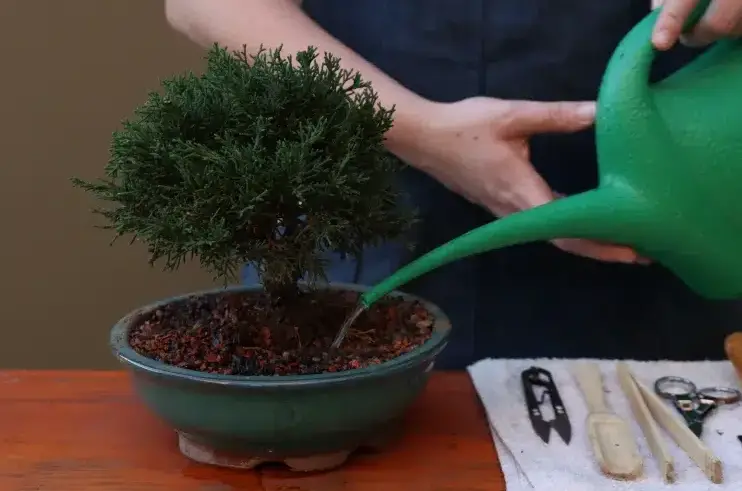
Use lukewarm water: Use lukewarm water for watering, especially if the bonsai is kept indoors. Cold water can shock the roots, especially if the soil is warm. Rainwater is ideal, but tap water is also acceptable.

Consider spraying leaves: Daily cleaning of the leaves can be done by gently spraying them with water. This helps keep the foliage clean and healthy. Avoid spraying cold water on hot soil to prevent thermal shock to the roots.
By following these guidelines and paying attention to the specific needs of your bonsai, you can ensure that it receives the right amount of water to thrive and remain healthy.


