
Have you heard of the rose chafer? What does it look like, and can it harm your plants? Let’s delve into the details!
What Is the Rose Chafer?
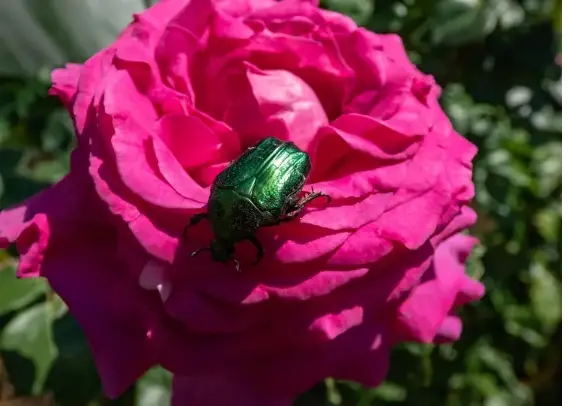
The golden chafer (Cetonia aurata) is a large beetle known for its striking metallic green color. You might also encounter its larval stage—large white worms often found in compost bins. Adult rose chafers emerge between April and October, with peak activity from June to August. True to its name, this insect is particularly drawn to rose bushes.
Is the Golden Cetonia Harmful?
To assess whether this insect poses a threat to your garden, it’s essential to understand its behavior. The larvae of cetonia are quite beneficial, as they are saproxylophagous, meaning they feed on dead wood. This natural recycling helps decompose dead plant matter, enriching the ecosystem.
However, while adult rose chafers do consume nectar and stamens, which may lead to the castration of affected flowers, significant damage is rare. In very uncommon cases, issues with future fruiting can arise. Despite this, Cetonia aurata acts as a pollinator, contributing positively to your garden.
Distinguishing Between Cetonia and Cockchafer Larvae

It’s important to differentiate between the cetonia larvae and those of cockchafers, which can be harmful as they feed on the roots of vegetable plants. Here’s how to tell them apart:
- Cetonia Larvae: Small brown head and a larger rear.
- Cockchafer Larvae: Larger head and a smaller rear.
Understanding these differences is crucial, as the former is beneficial while the latter can be a major pest.
What Are the Favorite Plants of the Golden Cetonia?
In addition to roses, the golden cetonia enjoys lilac, elderberry, hawthorn, and rosehip. Generally, this beautiful insect does not cause significant harm, as it primarily consumes dead parts of plants, making it a more beneficial presence in the garden.
In summary, while the rose chafer may occasionally nibble on flowers, its overall impact is minimal, and its role as a pollinator and decomposer makes it a valuable part of the garden ecosystem.


