It is frustrating to care for an orchid that looks alive but refuses to bloom. You water it, move it closer to the window, talk yourself out of buying another plant, and still the flower spike never appears. Then you rinse rice for dinner and see that cloudy water going down the drain.
That cloudy rinse water may be worth saving. Used carefully, rice water orchid fertilizer can give a gentle boost to plants that need light feeding during active growth. The key word is gentle. Orchids are not heavy feeders, and they can react badly when a home remedy is used too often or too strong.
If your orchid has healthy roots but seems weak, slow, or stubborn about blooming, rice water can become part of a simple care routine. It will not force flowers by itself, but it can support the plant while you fix the bigger bloom triggers.
What Rice Water Actually Does
Rice water is the liquid left after rinsing or soaking uncooked rice. It contains a small amount of starch and trace nutrients from the grain. Because it is mild, many gardeners like it as a low-cost plant tonic.
For orchids, mildness is a benefit. Phalaenopsis orchids and many common houseplant orchids grow on trees in nature, where their roots get air and small amounts of nutrients from rain, bark, and organic debris. They do not want a thick, heavy feeding poured into their pot every week.
Rice water works best as a support for root and leaf health. Strong roots help orchids store energy. That stored energy is what makes future bloom spikes more likely when light, temperature, and timing are right.
Before You Blame Fertilizer, Check the Bloom Basics
An orchid that refuses to bloom is often missing light, not food. Most common orchids need bright indirect light. A dark shelf may keep the plant alive, but it rarely gives enough energy for flowers.
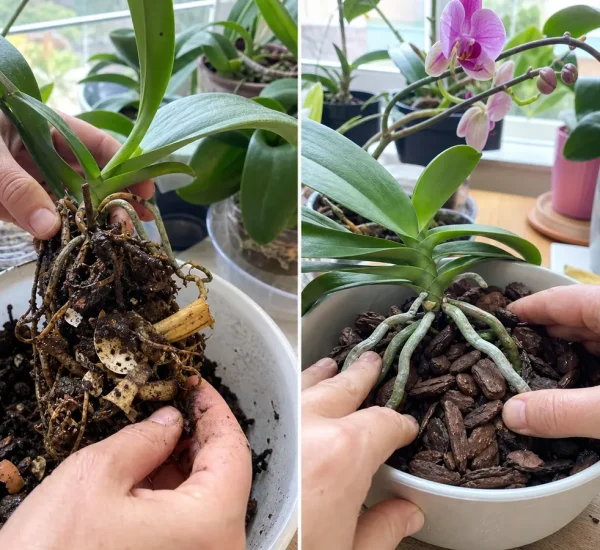
Roots matter too. Silver-green roots that turn green when watered are usually healthy. Brown, mushy, hollow, or sour-smelling roots need repotting, not rice water. Feeding a sick root system can make the problem worse.
Temperature can also play a role. Many moth orchids bloom better after a mild night temperature drop for a couple of weeks. If your home stays exactly the same temperature day and night, a healthy plant may keep making leaves instead of flowers.
How to Prepare Rice Water the Right Way
Start With Clean, Plain Rice
Place two tablespoons of uncooked rice in a bowl. Add one to two cups of water and swirl it with your fingers. The water should turn cloudy but not thick like glue.
Do not use salted rice, seasoned rice, oily leftovers, or water from cooked rice. Salt and heavy starch can damage orchid roots and make the bark mix break down faster.
Strain and Dilute
Strain the rice from the water. Then mix the rice water with an equal amount of fresh water. This simple dilution makes it safer for orchids, especially if you are trying it for the first time.
Use It While Fresh
Fresh rice water should smell clean and mild. If it smells sour, fermented, or unpleasant, do not use it indoors. Old rice water can attract fungus gnats and may encourage mold on the top of the potting mix.
How Often Should Orchids Get Rice Water?
Use diluted rice water once every four weeks during the growing season. That is usually spring and summer, or any time your orchid is actively growing fresh leaves and root tips.
Pour it slowly through the bark until water drains from the bottom. Let the pot drain completely before putting it back in a cover pot or saucer. Standing water is one of the fastest ways to stress orchid roots.
On the next watering, use plain water. This flushes the pot and keeps the bark from becoming sticky. If you already use a balanced orchid fertilizer, do not use both on the same week. Alternate lightly instead.
Common Mistakes to Avoid
One mistake is expecting rice water to create blooms on a weak plant in days. Orchid blooms take time. You are helping the plant build strength, not pressing a flower button.
A second mistake is using undiluted rice water again and again. Even mild liquids can become too much when residue builds up in bark. If the top of the pot turns fuzzy or smells bad, stop and flush with clean water.
A third mistake is feeding during root trouble. If the orchid wobbles in the pot, has blackened roots, or has yellowing leaves that feel soft, inspect the roots before adding anything extra.
A Better Bloom Plan With Rice Water
Place the orchid in bright indirect light. Water when the bark is nearly dry. Use diluted rice water once a month while the plant is growing. Keep air moving around the pot. After a few months, check for new root tips, firm leaves, and a possible flower spike near the base of the plant.
This routine is simple, but it works because it respects how orchids grow. They respond to balance more than drama.
Conclusion
Do not dump rice water automatically if your orchids refuse to bloom. Save a little, dilute it, and use it as a mild monthly support. Just remember that rice water is only one piece of the puzzle.
Give your orchid light, airflow, fresh bark, careful watering, and time. When those basics are right, a gentle rice-water boost can help a tired plant gather enough strength to surprise you with new buds.