
Stretched Succulent: Why It Happens and How to Avoid It

Succulents, with their diverse shapes, colors, and sizes, are highly favored for home decor due to their low-maintenance nature. These resilient plants require minimal care, adapting to various environments with ease. However, like all plants, succulents have specific needs, and when neglected, they can exhibit signs of etiolation—a process where the plant stretches as it seeks more light. Understanding and addressing this issue is crucial for maintaining the health and appearance of your succulents.
Etiolation in Succulents:

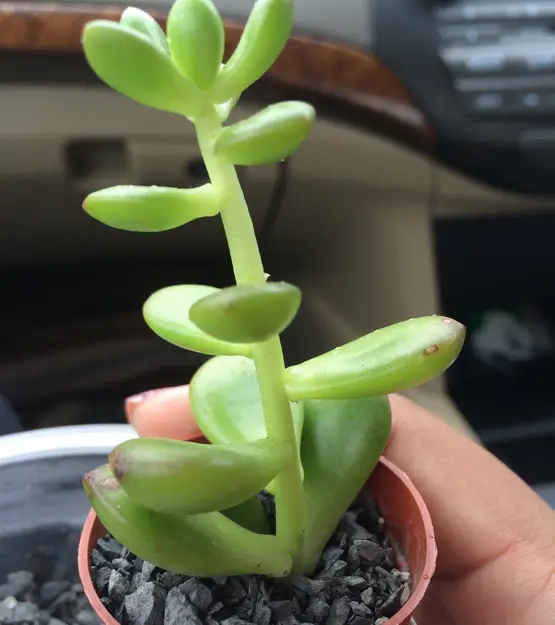
Etiolation is a reaction in plants, including succulents, caused by insufficient natural light. When a succulent lacks the required clarity for photosynthesis, it stretches its stems in an attempt to reach the available light. Recognizing the signs of etiolation is essential to address the issue promptly:
- Reduced Leaf Size: Leaves become smaller and less vibrant.
- Increased Spacing: Leaves are fewer and spaced farther apart.
- Color Changes: Leaves may lose their natural color and appear pale.
- Leaning Stem: The stem starts leaning to one side.
- Weak Growth: Despite elongation, the plant becomes weaker.
If you observe these signs, your succulent is likely stretching due to insufficient light.
Addressing Etiolation:
Addressing etiolation requires a patient and careful approach to ensure the succulent’s recovery. Follow these steps to reverse the effects:
- Remove Unhealthy Leaves: Take the succulent out of its pot and remove any dull or unhealthy leaves. Leave the higher, healthier leaves and separate them to encourage new shoots.
- Clean Cut of Stem: Use sharp scissors or a cutter for a clean cut close to the top of the plant. Avoid saw-like cuts.
- Healing Period: Allow the cut stem to heal for three to five days in a cool location before transplanting.
- Transplanting: Place the succulent in a new pot with fresh substrate after the healing period.
- Propagate New Plants: Plant the extracted healthy leaves on soil in a separate pot, encouraging new plant growth. The original leaf may dry out, but a new sprout will emerge.
While the healing process may take time, it is crucial for saving the succulent from etiolation and ensuring that the new growth receives the light it requires for optimal development. Avoid hasty solutions and follow these steps for a successful recovery.


