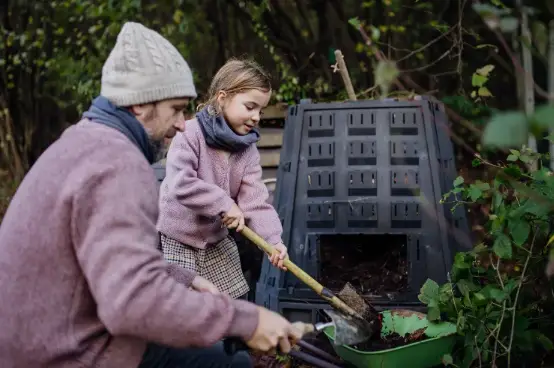
Composting is not only an ecological and economical solution for managing organic waste, but it also produces nutrient-rich compost that’s beneficial for your plants. Since January 2024, composting household organic waste has been mandatory, and it’s a practice that can significantly reduce the volume of waste sent to landfills. To ensure your composting process is successful, it’s important to know what materials to include, especially at the bottom of your composter. Let’s dive into the essentials of composting and how to get started!

Key Points to Keep in Mind
- Waste that should not be composted
- Ideal places to install a compost bin
- Materials to place at the bottom of a composter
How to Make Your Compost a Success
Creating high-quality compost requires a balanced mix of brown materials (carbon-rich) and green materials (nitrogen-rich). The ideal ratio is 40% brown and 60% green materials. Brown materials include dry, hard substances like leaves, while green materials include moist, soft substances such as food scraps. Coarse brown materials help with aeration, which is crucial for the decomposition process. For proper aeration, you may also use a compost aerator to keep your compost well-mixed and to maintain a humidity level of 50%.
Another important aspect of successful composting is placing your bin in the right location. You should position your composter away from fences or hedges to allow proper air circulation. A sunny or semi-shaded location is ideal for controlling temperature rise, which supports microbial activity and decomposition.
What Are Non-Compostable Wastes?

It’s essential to know what should not go into your compost. Avoid these materials:
- Chemicals and synthetic materials
- Treated or varnished wood
- Edible oils and fats
- Charcoal, barbecue briquettes, and firelighters
- Household dust, dirt, sand, and rubble
Including these items can interfere with the decomposition process or harm the microorganisms essential for composting. To successfully break down your organic waste, beneficial microorganisms like bacteria, fungi, insects, and earthworms need the right materials to thrive.
Where to Place the Compost Bin?
When choosing a location for your compost bin, it’s crucial to ensure proper air circulation. Avoid placing the bin too close to fences or hedges. For outdoor composting, it’s recommended to use a bottomless bin placed directly on the ground to allow organisms to access the compost from the soil beneath. For balconies or terraces, a composter with a bottom may be more suitable to contain the material.
What to Put at the Bottom of a Composter?

To start your composting process off right, the bottom layer of your bin plays a key role. Here’s what you should do:
- Brown Materials: Start with materials like dry leaves, small branches, or straw. These materials are carbon-rich and will help promote aeration in the compost bin.
- Avoid Nitrogen-Rich Liquids: Do not add overly liquid or highly nitrogenous materials at the bottom, as they can impede proper decomposition and lead to unpleasant odors.
- Add Compost Activators: For faster decomposition, you can incorporate a compost activator, which can be found at most gardening stores. These natural biostimulants are ideal for organic farming.
Ideal Green (Nitrogen-Rich) Materials
Once the bottom layer is set, add these green materials to keep the compost bin balanced:
- Fruit and vegetable peelings and food scraps
- Garden waste like fresh plant clippings and grass mowings
- Fresh-sized branches, green fertilizers, and faded flowers and leaves (still green)
Ideal Brown (Carbon-Rich) Materials
Next, add brown materials to maintain the carbon-to-nitrogen ratio and aid in decomposition:
- Magazines or newspapers without ink
- Moist, cut papers, and crushed egg shells
- Wood prunings or branches (crushed)
- Crushed dried fruit shells and dry softwood waste
By layering these materials carefully, you create an ideal environment for microorganisms to break down the organic matter efficiently.
Conclusion
Composting is an excellent way to reduce waste while producing rich compost that nourishes your plants. To set up your composter for success, it’s important to understand what materials to use, especially at the bottom of your bin. By starting with the right brown materials, avoiding non-compostable waste, and maintaining a balanced mix, you’ll create the perfect environment for decomposition. Follow these steps, and you’ll soon have a thriving compost system that benefits both your garden and the environment!