
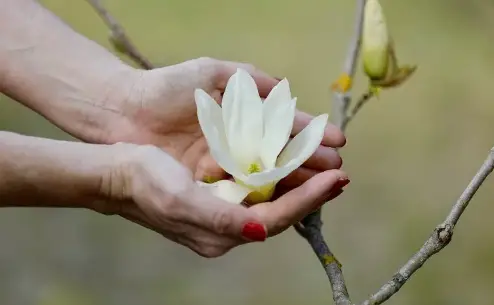
The magnolia, with its beautiful variations, is a stunning tree known for its angelic petals and sweet scent. If you have space in your garden, planting a magnolia can bring freshness and beauty. Learn about the right time to plant, the planting process, maintenance tips, and how to address potential diseases.
1. When to Plant a Magnolia?

The ideal time to plant a magnolia is during cool weather. Fall, late winter, and early spring are optimal. If you live in a cooler area, plant it in full sun; for warmer regions, partial shade is recommended.
2. How to Plant a Magnolia?
Tools needed:
- Shovel
- Gloves
- Well-drained, fertile soil with slightly acidic pH
- Water
Procedure:
- Dig a hole twice the size of the magnolia’s root ball in fertile, well-drained soil. Avoid clayey soil.
- Place the root ball in the hole, adding soil around and on top. Do not press too hard; leave it airy.
- Water thoroughly after successful planting.
- Apply mulch to maintain soil temperature and moisture.
Watch a tutorial on planting magnolias
3. Magnolia Care Tips
Soil Type: Magnolias thrive in well-drained, acidic soil. If your soil is more alkaline, consider adding coffee grounds, banana peel fertilizer, epsom salt, vinegar, eggshells, or crushed mussel/oyster shells for calcium and magnesium.
Watering:
- Water newly planted magnolias at least twice a week for 5-6 months.
- Reduce watering to 2-3 times per month once established.
- Stop watering during the dormant period in winter.
Pruning: The best time to prune is early spring or late summer. Avoid winter pruning to prevent disturbance during dormancy.
3.1 Magnolia Diseases: Causes and Solutions
Magnolias can be susceptible to fungal diseases due to overwatering. Common diseases include leaf spot, root rot, and wood rot.
Leaf Spot:
- Symptoms: Brown and black spots on leaves with holes and black edges.
- Treatment: Add natural fertilizer, space out waterings.
Root Rot:
- Symptoms: Caused by overwatering, leading to rotting roots.
- Treatment: Stop watering completely for a few weeks to assess improvement.
Wood Rot:
- Symptoms: Literal fungus growth on the tree.
- Treatment: Use a natural fungicide until the issue is resolved.
3.2 How to Keep Harmful Insects Away?
Magnolias attract insects like mealybugs and weevils. Address infestations with a mixture of water and dishwashing liquid. To deter slugs and snails, place mussel shells or eggshells around the trunk or create a beer trap overnight.

In conclusion, planting and caring for a magnolia involves understanding the right timing, proper planting techniques, regular maintenance, and addressing potential diseases and pests promptly. Following these guidelines will help ensure the health and vibrancy of your magnolia tree.


