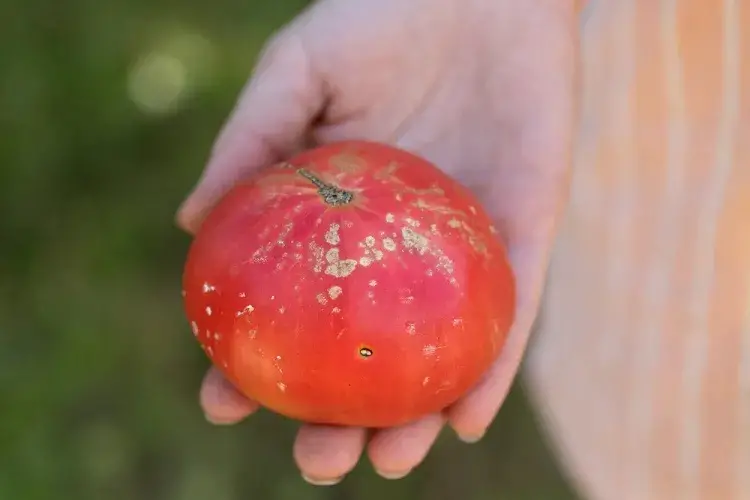
Why Do Tomatoes Have Yellow Spots?

Last weekend, while helping my grandfather prepare canned tomatoes for the winter, I noticed an issue: all the tomatoes had yellow spots. This prompted us to harvest everything and pull up the plants, which weren’t producing any more fruit. What could be causing these spots? After consulting a specialist at a university botanical garden, I learned that there are several potential causes for these yellow spots. Understanding these causes is crucial for managing and preventing similar issues in your garden. Here’s what you need to know:
Bacterial Canker
Bacterial canker manifests as tiny black spots with whitish halos on ripe tomatoes. This serious infectious disease is difficult to treat and there are no resistant varieties. It can kill the plant and spread to others, necessitating rigorous disinfection. If you spot this issue, it’s essential to remove affected fruits from your garden immediately, and they should not be added to the compost.
- Can We Eat Them?: Tomatoes with bacterial canker are not toxic, but they might have an unpleasant taste and altered texture. It’s generally advisable to avoid eating visibly affected tomatoes for quality and safety reasons. However, you can cut away the damaged parts and cook the tomatoes, as high temperatures will kill any bacteria present.
Bedbug Invasion
Stink bugs can wreak havoc on tomato plants. They feed by inserting their needle-like mouthparts into the fruit and sucking out the juice. This feeding leads to irregular, pale yellow spots on the skin and hard, white areas underneath. These spots are sometimes described as “yellow clouds.” Stink bugs are particularly problematic in August when plants are stressed by the heat.
- Can We Eat Them?: Tomatoes damaged by stink bugs can typically be eaten, but ensure you wash them thoroughly and remove the yellowed areas. I peeled the affected tomatoes and used them to make tomato sauce for pasta.
Green-Yellow Collar
Green-yellow collar is not a disease but rather a deformity. It features a hard, yellow or green area around the peduncle, with white or green internal tissues. The exact cause is unknown but is linked to unfavorable weather conditions and soil issues, such as low potassium, low organic matter, and high pH.
- Can We Eat Them?: Although these tomatoes may be slightly less tasty than fully ripe ones, they are still edible. They can be used in salads or other dishes.
Maintaining a healthy garden requires vigilance and preventive measures. Using natural fertilizers, watering regularly, and protecting plants from the sun can enhance plant immunity. If these issues have already affected your garden, avoid planting tomatoes in the same spot next year.


