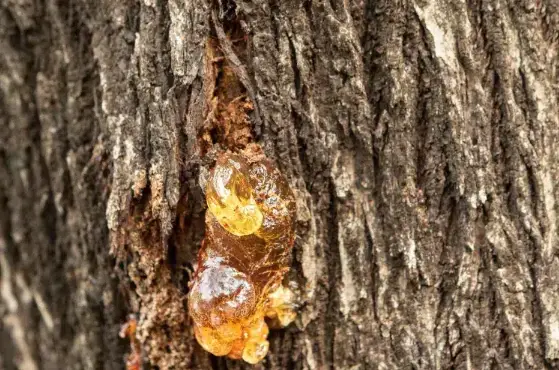
Resin is one of the most fascinating substances produced by certain trees, especially conifers like firs and pines. But why do trees make resin, and how does it benefit them? Let’s dive into the details!
Why Do Trees Make Resin?
Trees are commonly divided into two large categories: deciduous trees and conifers (also known as resinous trees). Resin is a substance secreted by these resinous trees, and it’s not just a random byproduct—there’s a clear purpose behind it.
Coniferous trees, such as Douglas Pine, Norway Spruce, Maritime Pine, Scots Pine, and Silver Fir, all produce resin. But what exactly is resin, and why do these trees produce it?
Resin or Sap, Is It the Same Thing?
Before we go further, let’s clarify an important distinction: resin and sap are not the same thing. These two liquids serve different purposes and come from different places within the tree.
- Sap is the nutrient-rich liquid that circulates through the tree, moving upwards from the roots to the leaves and branches.
- Resin, on the other hand, is a thick, sticky substance produced in the resin canals found in the tree’s bark, wood, and needles.
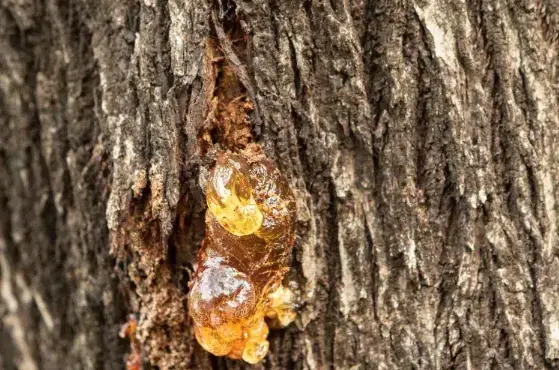
While sap moves through the tree, resin remains in its channels and doesn’t circulate. It only flows when the tree is injured and comes into contact with air, where it hardens and helps seal the wound.
Why Do Trees Make Resin?
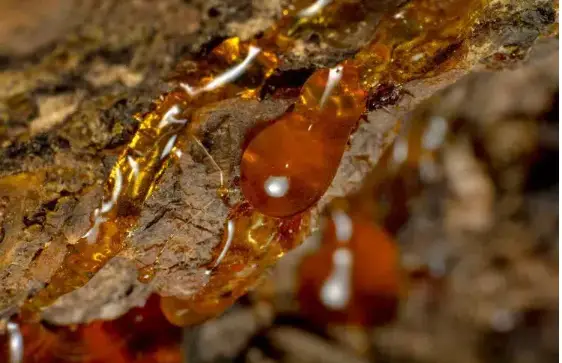
So, why do trees make resin? The answer lies in protection and healing. Resin plays a crucial role in the wound healing process of trees, particularly in conifers, which grow slowly and can’t close wounds as quickly as faster-growing trees like deciduous trees.
When a conifer is injured, it produces resin to cover the wound, preventing the underlying tissue or wood from rotting. In contrast, deciduous trees form a callus—a type of scar tissue—to close the wound.
Additionally, resin acts as a defense mechanism against predators. The resin in the tree’s needles and bark is not only sticky but also repellent. When insects or animals puncture the tree, the resin flows into the wound, either blocking the invader’s progress or trapping them in the sticky substance. This helps protect the tree from further damage.
A Traditional Process: Tapping Resin
Resin has been harvested by humans for centuries, a process known as tapping. Traditionally, tapping involves making a controlled wound in the tree to encourage the flow of resin, which is then collected.
Here’s how tapping works:
- Prick the Tree: Starting in early March, the bark of a tree (usually a pine) is pricked with an axe.
- Resin Flows: The tree responds by secreting resin, which starts to flow and crystallizes when it comes into contact with the air.
- Collecting the Resin: The resin is collected in a pot, typically made of terracotta. The process continues for several harvests during the year—usually five times, with the last harvest taking place in November.
- Reopening the Wound: As the resin crystallizes, the wound may need to be reopened to keep the resin flowing.
This process has been used for centuries, and while it’s not as common today, it’s still a fascinating example of how humans have interacted with trees and their resin.
Conclusion
Resin is not just a byproduct of trees—it’s an essential substance that helps trees heal, protect themselves from predators, and even improve their defenses. Whether it’s for the tree’s survival or for traditional tapping, resin plays an important role in the life of coniferous trees. So next time you see a tree covered in resin, you’ll understand its purpose a little better!


