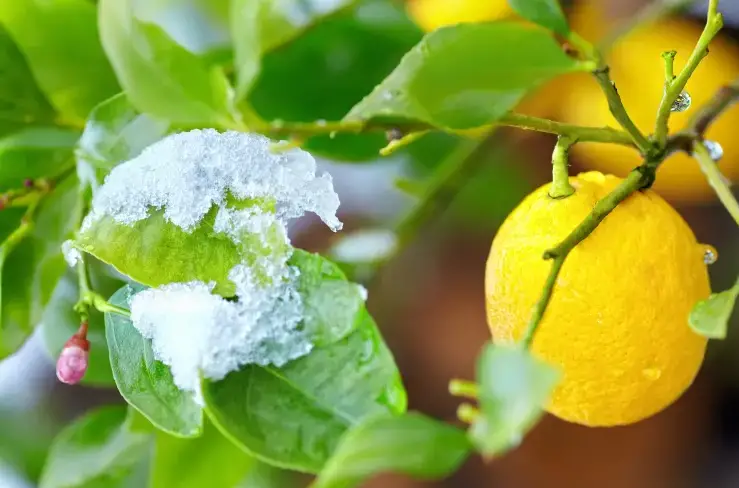
Experiencing leaf loss on your lemon tree during winter can be concerning, but it’s essential to understand the underlying reasons and take appropriate action.
Here are five common causes and solutions:

1. Cold and Frost
- Cause: Low temperatures and frost can stress lemon trees, leading to leaf loss.
- Solution: Protect outdoor trees from cold and frost by covering them. For potted plants, bring them indoors or cover them if moving them is impractical.

2. Heat and Drought
- Cause: Extreme indoor heat and drought conditions can cause foliage to dry out and turn yellow.
- Solution: Avoid placing the plant near heat sources. Water deeply and ensure the soil remains slightly moist but not soggy. Mulching can help retain moisture.
3. Improper Watering
- Cause: Inconsistent or improper watering practices can stress the lemon tree.
- Solution: Use room temperature water and allow the soil to partially dry out between waterings. Maintain slightly moist soil, avoiding both drought and waterlogging.
4. Wind Exposure
- Cause: Strong winds can dry out foliage and soil, leading to leaf loss.
- Solution: Move the plant to a sheltered location away from strong winds. If relocation isn’t possible, create a windbreak or provide other forms of protection. Ensure deep watering to support root health.
5. Lack of Light
- Cause: Reduced sunlight during winter can negatively impact lemon trees.
- Solution: Place the tree in a location with maximum sunlight exposure during the day. While there’s limited control over sunlight availability in winter, maximizing exposure can help mitigate leaf loss. Temporary leaf loss due to reduced light is typically resolved in spring.

By addressing these common causes and implementing the suggested solutions, you can help your lemon tree overcome leaf loss during winter and ensure its health and vitality throughout the season.
Show Comments


