
When a thuja turns brown in winter, it can be concerning, but it’s essential to understand the possible causes and solutions to address the issue effectively.
Here’s a breakdown:

What causes a cedar to turn brown in winter?
Stresses of young specimens:
Newly planted cedars may experience shock during their adaptation period, leading to yellowing, browning, or wilting of branch ends.
Young trees often lose many roots during transplantation and need time to recover. Minimizing stress is crucial for their successful establishment.
Practical advice: Plant cedars in spring or early autumn, handle roots carefully during transplantation, and maintain regular watering for the first six months after planting.
Thuja brown from frostbite:
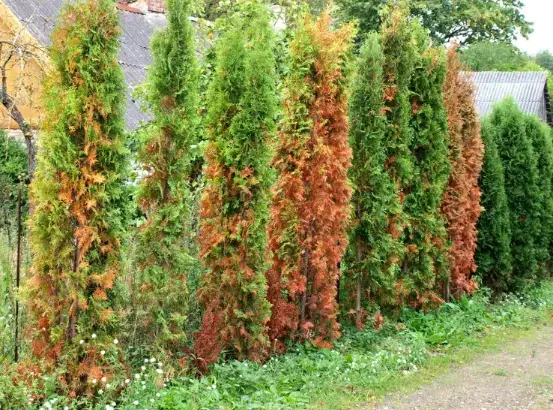
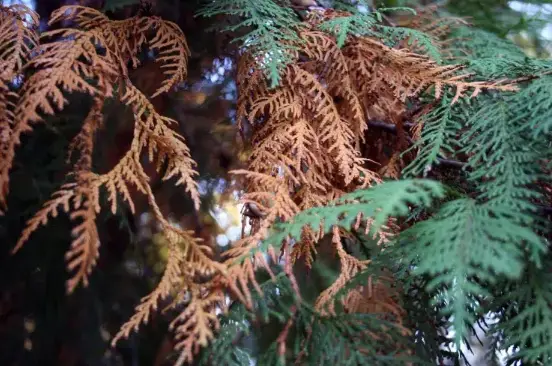
Extreme cold temperatures and strong sunlight can cause winter cold burn, leading to browning and shriveling of leaves.
To prevent frost damage, water shrubs thoroughly before temperatures drop, mulch with shredded bark, and consider using a jute winter cover in colder regions.
Exclude the presence of diseases:

Check for fungal diseases like Pestalotiopsis, which can affect cedars, especially in spring when plants are still recovering from winter stress.
Look for tiny black “buds” at the base of affected plants or browned branches, indicating fungal infection.
Prune affected foliage on dry days to prevent further spread, and avoid watering methods that can spread fungal spores through splashing.
Solutions:
- Proper planting and care: Ensure proper planting techniques, including careful root handling and adequate watering, especially for young specimens.
- Winter protection: Mulch and use winter covers to shield cedars from extreme cold and sunlight, minimizing the risk of frost damage.
- Disease management: Regularly inspect plants for signs of fungal diseases and take appropriate measures to prevent and treat infections, such as pruning affected foliage and avoiding splashing water.
By understanding these causes and implementing the recommended solutions, you can help your thuja thrive and maintain its lush green appearance throughout the winter months.


