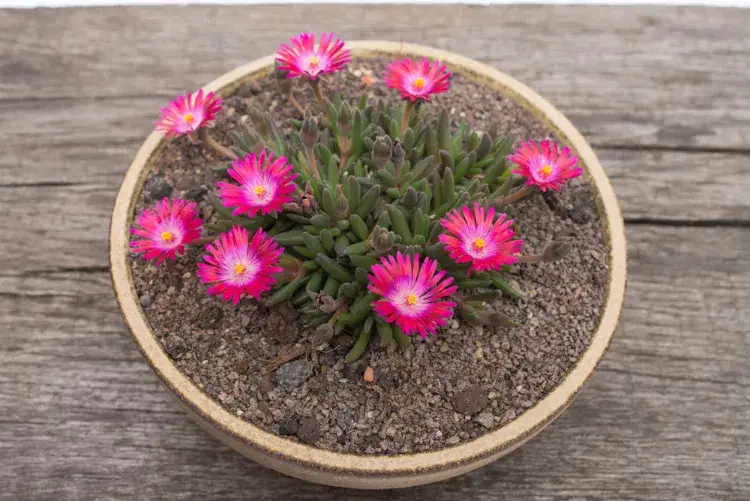
Perennial purslane, also known as Delosperma, is a stunning and versatile succulent that can add vibrant color to any garden. Whether you’re looking to adorn your balcony, terrace, or indoor space, growing perennial purslane in a planter is a fantastic option. Here’s everything you need to know to successfully cultivate this beautiful plant in containers.

Is Perennial Purslane Suitable for Growing in Pots?
Absolutely! Perennial purslane (Delosperma) is well-suited for container gardening. Its cascading stems and bright, colorful flowers make it an excellent choice for hanging baskets and mixed planters. This plant is quite adaptable and can thrive in pots with the right care.
When to Plant Perennial Purslane in a Planter
Timing:
The best time to plant perennial purslane in a container is in the spring. This allows the plant to establish itself during the growing season.
Container Size:
Perennial purslane has shallow roots, so a smaller pot works well. Aim for a container with a diameter of at least 30 cm. You can plant two to three small plants in the same container.
Drainage:
Good drainage is crucial to prevent root rot. Ensure your pot has drainage holes, and consider adding a layer of gravel or broken pottery at the bottom of the pot for additional drainage.
What Type of Soil for Delosperma?
Soil Requirements:
Delosperma prefers well-drained, aerated soil. A soil mix designed for succulents and cacti is ideal. This type of soil provides the drainage and aeration needed to prevent root rot.
Soil Composition:
While perennial purslane isn’t particularly demanding, using an organic soil mix can enhance growth. Avoid rich, heavy soils as they retain moisture, which can be detrimental to this plant.
How to Care for Perennial Purslane in a Planter
Sunlight:
Delosperma requires plenty of sunlight to thrive—ideally at least 6 hours of indirect sunlight per day. Direct, harsh sunlight can burn the leaves, so a spot with filtered sunlight or partial shade is preferable.
Watering:
Water the plant when the top layer of soil feels dry. Perennial purslane is drought-tolerant and prefers soil that dries out between waterings. In winter, reduce watering frequency as the plant’s growth slows down.
Is Fertilization Necessary?
Feeding:
While Delosperma isn’t a heavy feeder, providing occasional fertilization can be beneficial. Use a balanced, water-soluble fertilizer or a cactus/succulent-specific formula.
Timing:
Fertilize in the spring and again in mid-summer. Be cautious not to over-fertilize, as too much can lead to weak growth and potential damage to the plant.
How to Care for Perennial Purslane in a Pot in Winter
Outdoor Winter Care:
If you live in a mild climate, you can keep your potted perennial purslane outside during winter. However, protect it from excessive moisture and frost. Consider moving the pot to a sheltered location.
Indoor Winter Care:
If growing indoors, place the pot in a sunny spot to encourage growth. The plant will grow more slowly and may flower less indoors. Occasionally take the pot outside to benefit from natural sunlight.
Protection:
In colder climates, it’s best to place the pot in a conservatory, greenhouse, or another sheltered area to shield it from harsh winter conditions.
Final Tips
- Monitor for Pests: Check regularly for pests like mealybugs or aphids, which can affect succulents.
- Repotting: Refresh the soil and check for root bound conditions every couple of years or as needed.
- Container Choice: Use pots with adequate drainage and avoid using overly large containers which can retain excess moisture.
By following these guidelines, you’ll ensure your perennial purslane flourishes in its planter, adding beauty and vibrant color to your space. Happy gardening!By Celine Martineau
Published August 31, 2024
Perennial purslane, also known as Delosperma, is a stunning and versatile succulent that can add vibrant color to any garden. Whether you’re looking to adorn your balcony, terrace, or indoor space, growing perennial purslane in a planter is a fantastic option. Here’s everything you need to know to successfully cultivate this beautiful plant in containers.
Is Perennial Purslane Suitable for Growing in Pots?
Absolutely! Perennial purslane (Delosperma) is well-suited for container gardening. Its cascading stems and bright, colorful flowers make it an excellent choice for hanging baskets and mixed planters. This plant is quite adaptable and can thrive in pots with the right care.
When to Plant Perennial Purslane in a Planter
Timing:
The best time to plant perennial purslane in a container is in the spring. This allows the plant to establish itself during the growing season.
Container Size:
Perennial purslane has shallow roots, so a smaller pot works well. Aim for a container with a diameter of at least 30 cm. You can plant two to three small plants in the same container.
Drainage:
Good drainage is crucial to prevent root rot. Ensure your pot has drainage holes, and consider adding a layer of gravel or broken pottery at the bottom of the pot for additional drainage.
What Type of Soil for Delosperma?
Soil Requirements:
Delosperma prefers well-drained, aerated soil. A soil mix designed for succulents and cacti is ideal. This type of soil provides the drainage and aeration needed to prevent root rot.
Soil Composition:
While perennial purslane isn’t particularly demanding, using an organic soil mix can enhance growth. Avoid rich, heavy soils as they retain moisture, which can be detrimental to this plant.
How to Care for Perennial Purslane in a Planter
Sunlight:
Delosperma requires plenty of sunlight to thrive—ideally at least 6 hours of indirect sunlight per day. Direct, harsh sunlight can burn the leaves, so a spot with filtered sunlight or partial shade is preferable.
Watering:
Water the plant when the top layer of soil feels dry. Perennial purslane is drought-tolerant and prefers soil that dries out between waterings. In winter, reduce watering frequency as the plant’s growth slows down.
Is Fertilization Necessary?
Feeding:
While Delosperma isn’t a heavy feeder, providing occasional fertilization can be beneficial. Use a balanced, water-soluble fertilizer or a cactus/succulent-specific formula.
Timing:
Fertilize in the spring and again in mid-summer. Be cautious not to over-fertilize, as too much can lead to weak growth and potential damage to the plant.
How to Care for Perennial Purslane in a Pot in Winter
Outdoor Winter Care:
If you live in a mild climate, you can keep your potted perennial purslane outside during winter. However, protect it from excessive moisture and frost. Consider moving the pot to a sheltered location.
Indoor Winter Care:
If growing indoors, place the pot in a sunny spot to encourage growth. The plant will grow more slowly and may flower less indoors. Occasionally take the pot outside to benefit from natural sunlight.
Protection:
In colder climates, it’s best to place the pot in a conservatory, greenhouse, or another sheltered area to shield it from harsh winter conditions.
Final Tips
- Monitor for Pests: Check regularly for pests like mealybugs or aphids, which can affect succulents.
- Repotting: Refresh the soil and check for root bound conditions every couple of years or as needed.
- Container Choice: Use pots with adequate drainage and avoid using overly large containers which can retain excess moisture.
By following these guidelines, you’ll ensure your perennial purslane flourishes in its planter, adding beauty and vibrant color to your space. Happy gardening!