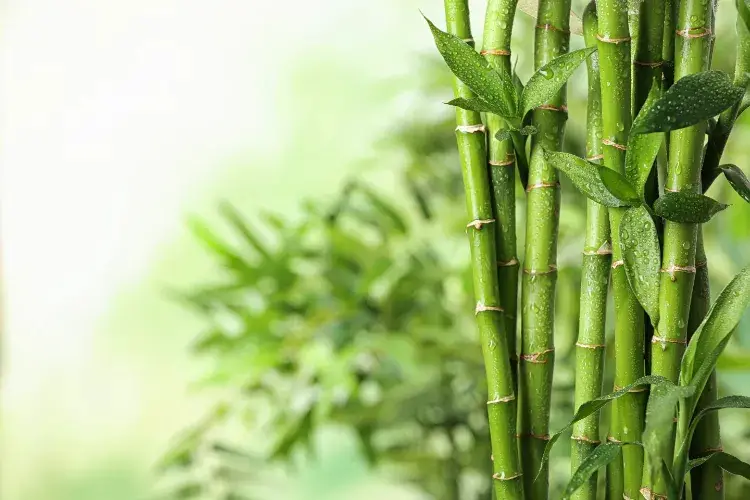
Bamboo stakes are not only eco-friendly but also durable and effective for supporting plants. Bamboo is a biodegradable and renewable resource, making it an excellent choice for gardening. Here’s a step-by-step guide on how to create bamboo stakes and use them to support your plants.
1. Making a Bamboo Stake: All the Hows and Whys!
How to Cut Bamboo and Install It
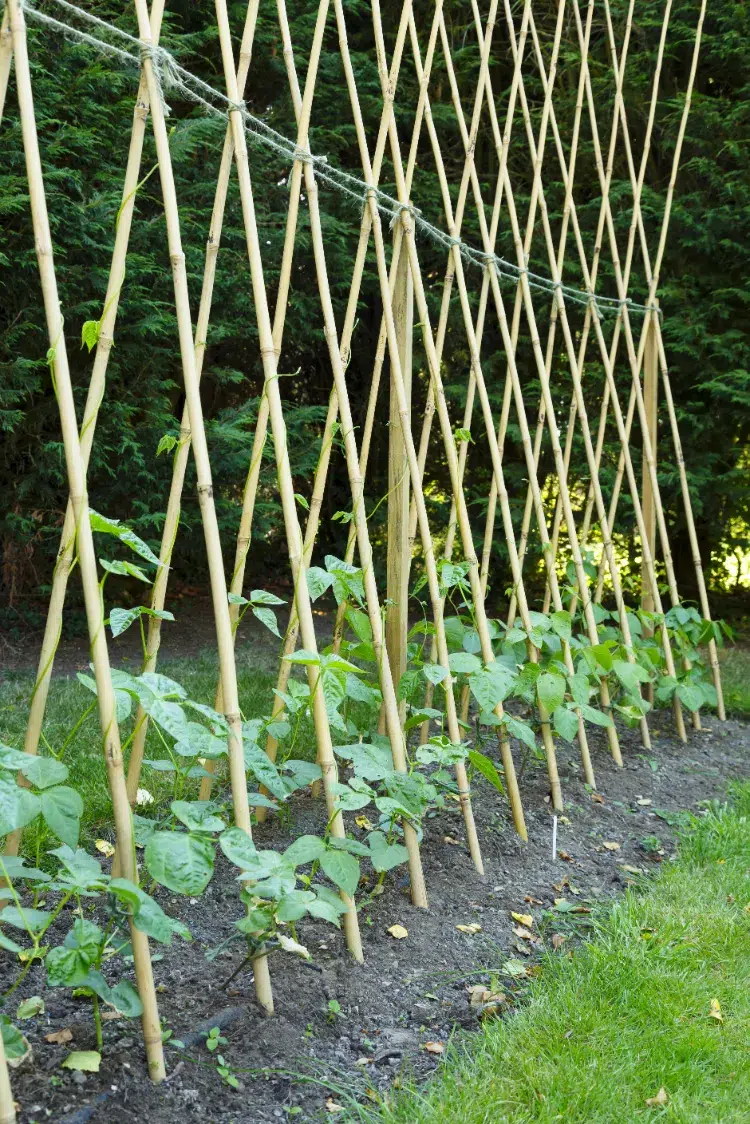
To maximize the benefits of bamboo stakes, follow these steps:
- Cutting Bamboo:
- Best Time: October and November are ideal for cutting bamboo. Choose stems that are at least 3 years old. Avoid using bamboo from the current year’s growth as it is less sturdy and better suited for nutrient transport.
- Tools: Use pruning shears for small diameter bamboos, which are easier to cut. For larger bamboo, a saw may be required.
- Technique: Cut the bamboo at the base to prevent sharp edges that could cause injury. Remove branches and leaves to simplify handling.
- Preparing the Stakes:
- Clean Up: After cutting, remove any remaining branches and leaves. This will help with maintenance and ensure that the stakes are clean.
- Drying: To extend the lifespan of your stakes, allow them to dry in the sun for at least 2 weeks. This will reduce the rate of decay when they are placed in the soil.
- Installing Bamboo Stakes:
- Placement: Install the stakes directly into the garden soil. Be aware that green, fresh stakes have a shorter lifespan as they degrade faster.
- Drying Option: For better longevity, let the bamboo stakes dry thoroughly before planting them. This step will enhance their durability and reduce the need for frequent replacements.
How to Make a Bamboo Stake for Tomatoes: V or Teepee, Take Your Pick!
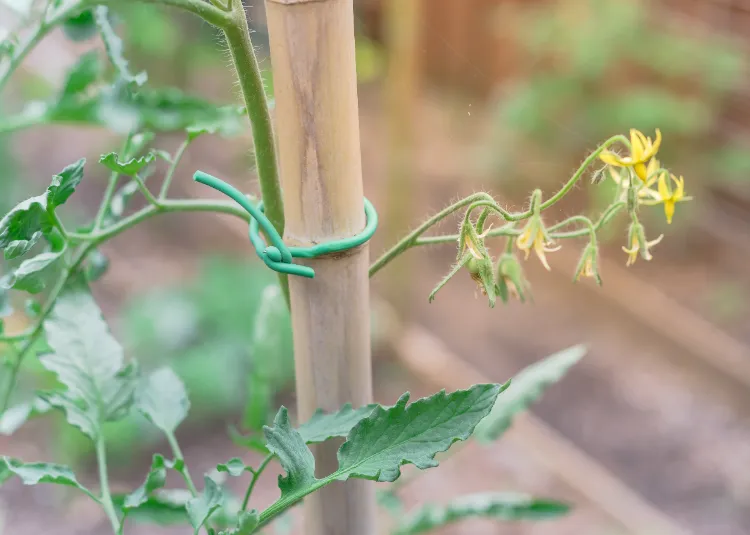
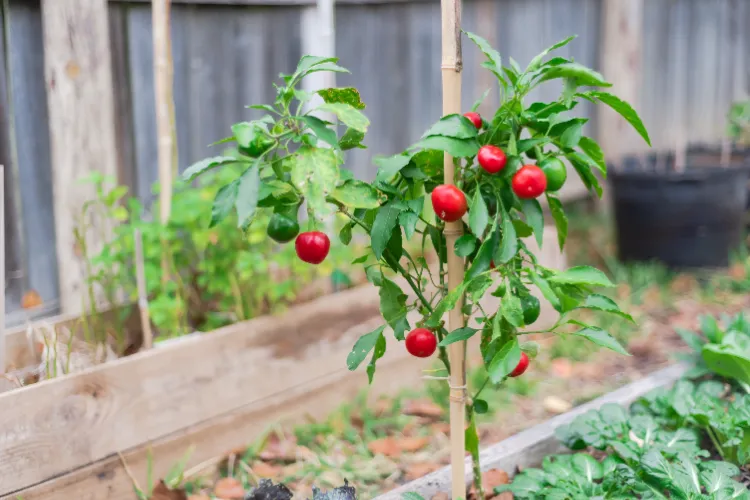
You have two great options for constructing bamboo stakes to support your tomato plants:
- V-Shaped Stake:
- Setup: Plant two rows of bamboo stakes vertically in the ground, spaced about 50 cm apart.
- Formation: Tilt the stakes inward to form inverted V-shapes.
- Connecting: Secure the stakes together using string or wire. Place a long horizontal stake across the top to connect the V-shaped structures, providing additional support.
- Teepee Stake:
- Formation: Plant three or more stakes in the ground, spaced 50 cm apart, to form a triangular shape.
- Tying: Tie the tops of the stakes together securely using string or wire. This teepee shape offers a sturdy and traditional method for supporting climbing plants.
Conclusion
Making and using bamboo stakes is a fantastic way to support your plants while being environmentally conscious. By choosing the right bamboo, cutting it properly, and employing effective staking techniques, you can ensure your garden thrives. Whether you opt for the V-shaped or teepee stake method, bamboo stakes will provide the strength and support your plants need to grow and flourish. Happy gardening! 🌱🌿