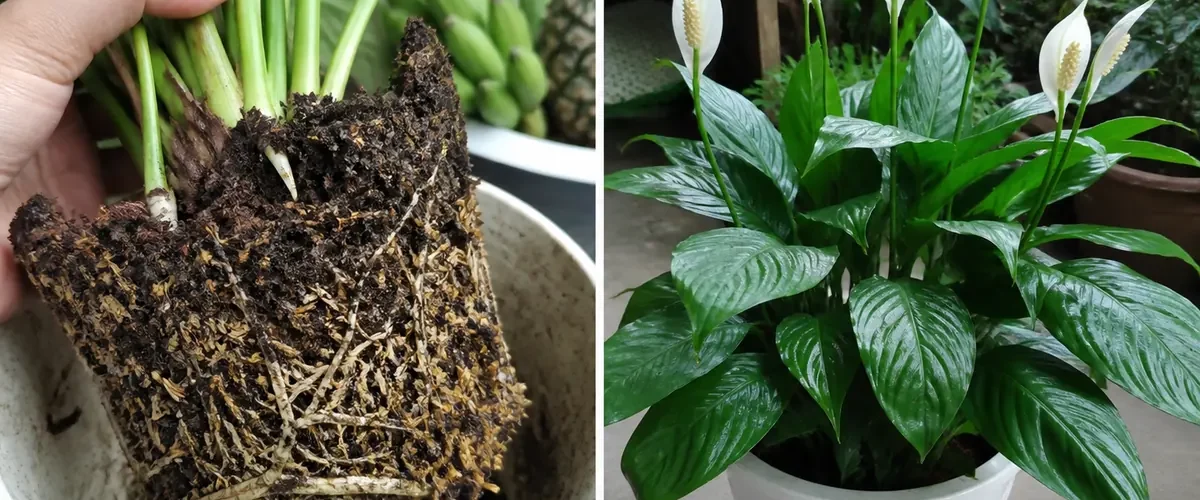
A leafy peace lily without flowers is an energy-allocation problem before it is a fertilizer problem. Lirio de la paz sano y floreciendo: el truco natural uses thick blended rice water being poured twice each week into a leafy peace lily to promise vigorous growth and many flowers to claim that one handful of rice turns a healthy peace lily into an abundant bloomer.
A rice-water comparison is meaningful only beside light, roots, moisture, and complete nutrition. Those variables can verify glossy healthy leaves and a dependable flush of white flowers.
The Real Route to Glossy Healthy Leaves and a Dependable Flush of White Flowers
The central evidence is this: rice water contains variable residue and is not complete fertilizer. Frequent thick applications can sour potting mix or attract gnats. A mature peace lily flowers most reliably with useful indirect light, healthy roots, even moisture, warmth, and measured complete nutrition.
The featured idea remains useful as a starting question. Diagnosis, dose, timing, and comparison are what support glossy healthy leaves and a dependable flush of white flowers.
Start Here: Baseline Check: Move the Plant Toward Bloom-capable Light
Build the baseline first: inspect leaf color, new versus old leaves, root firmness, pot size, drainage, soil odor, moisture depth, light direction and duration, cold or heat exposure, fertilizer history, pests, and whether the plant is mature enough to bloom.
Record the strongest two peace lily flowering reset clues before changing anything. If they point in opposite directions, correct the most urgent cause first and delay every optional treatment.
Measured Trial: The Six-Step Peace Lily Flowering Reset Route to Glossy Healthy Leaves and a Dependable Flush of White Flowers
- Baseline Check: Move the plant toward bloom-capable light. For the baseline, increase bright indirect light gradually, keeping leaves away from harsh midday sun and checking whether deep shade has produced foliage without flowers.
- Second Signal: Test the root zone before watering. At the second stage, use soil feel and pot weight, then water thoroughly only when the upper mix reaches the plant’s proper dry point and empty the saucer.
- Primary Correction: Correct crowded or sour soil. For the main correction, repot when roots are severely crowded or mix stays wet and smells stale, using a modest draining pot rather than a large moisture reservoir.
Targeted Action: Supply Complete Nutrition
Next, during active growth, apply a labeled balanced houseplant fertilizer at the stated rate instead of asking rice starch to provide every nutrient.
Controlled Comparison: Keep Rice Water as a Cautious Comparison
For the controlled comparison, if testing the source idea, use fresh weak strained unsalted water on one healthy plant infrequently and stop at odor, film, mold, or gnats.
Final Proof: Track New Leaves and Flower Stems
To verify the result, photograph the same crown weekly and judge the method by clean new growth and emerging flower stalks, not temporary leaf shine.
A Small Test That Backs the Promise of Glossy Healthy Leaves and a Dependable Flush of White Flowers
Choose two direct peace lily flowering reset measures before treatment, such as root color, new growth, leaf posture, flower retention, fruit set, or soil moisture. Keep one normal condition unchanged when practical.
Compare those plant measures on the same schedule. If one improves while another worsens, pause and diagnose again. A backed result means the evidence moves together toward glossy healthy leaves and a dependable flush of white flowers.
The Peace Lily Flowering Reset Cause-and-Effect Behind the Visible Change
Plant responses become useful evidence when the sequence is controlled. The baseline check, move the plant toward bloom-capable light, defines the starting condition; test the root zone before watering and correct crowded or sour soil then correct the systems that support new tissue.
The comparison step, keep rice water as a cautious comparison, tests the main explanation. The final proof, track new leaves and flower stems, shows whether the response continues. That cause-and-effect chain can genuinely create glossy healthy leaves and a dependable flush of white flowers.
Peace Lily Flowering Reset Safety Rules That Belong Inside the Method
Keep the control conditions safe: discard food-based plant liquids promptly, wash the container, and keep fertilizer labeled. Peace lilies contain irritating calcium oxalate, so keep the plant away from children and pets and wash hands after pruning or repotting.
Follow product labels and note every material used in the peace lily flowering reset trial. Do not combine treatments merely because each one sounds mild on its own.
What Changes Quickly in Peace Lily Flowering Reset and What Needs Time
Use the calendar as evidence: a wilted but healthy peace lily may lift within hours after correct watering, while root repair and new leaves need weeks. Flowers appear only after the plant has enough light and stored energy, often over a much longer cycle than a twice-weekly rice treatment suggests.
Separate an immediate peace lily flowering reset response from new growth or lasting control. Record the date of each change, then compare the same signals under similar conditions.
Four Mistakes That Block the Peace Lily Flowering Reset Result
- Avoid pouring thick rice milk twice weekly. It weakens the evidence needed to repeat the peace lily flowering reset result.
- Avoid feeding a waterlogged root ball. It may improve one photograph while the wider peace lily flowering reset system declines.
- Avoid expecting fertilizer to replace light. It adds a new variable before the peace lily flowering reset cause is understood.
- Avoid moving directly into harsh sun. It can delay the useful correction and prolong the original peace lily flowering reset problem.
Give Your Peace Lily This and Watch Healthy Blooms Appear: The Result Worth Keeping
A compelling peace lily flowering reset result becomes trustworthy when diagnosis and action match. Start with the check move the plant toward bloom-capable light, keep the timeline honest, and use several signals to confirm glossy healthy leaves and a dependable flush of white flowers.


